

Wood Entry Doors
Mahogany, oak, and other hardwoods. Beautiful, but sun breaks down the finish and moisture swells the wood.
- Our prep
- Strip or sand failed finish, fill checks and dings
- Finish
- Stain plus a UV-resistant exterior clear coat, or paint

 Door Painting & Refinishing · Palm Beach County
Your front door is the first thing people see, and interior doors get touched every day. We restore wood to its original luster, fill years of gaps, cracks, and dings, and spray a smooth, even finish that lasts.

Dull, weathered wood brought back to a deep, glowing finish, with every panel and edge done by hand before the final coats.
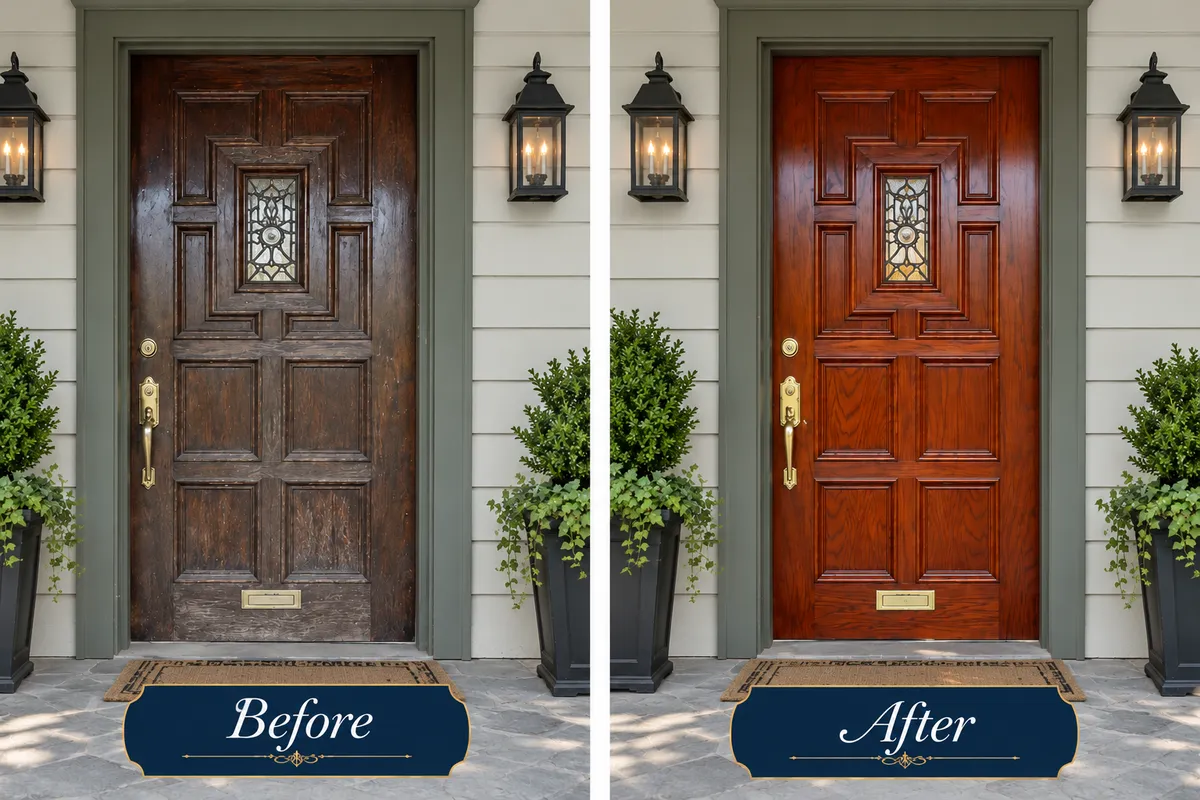
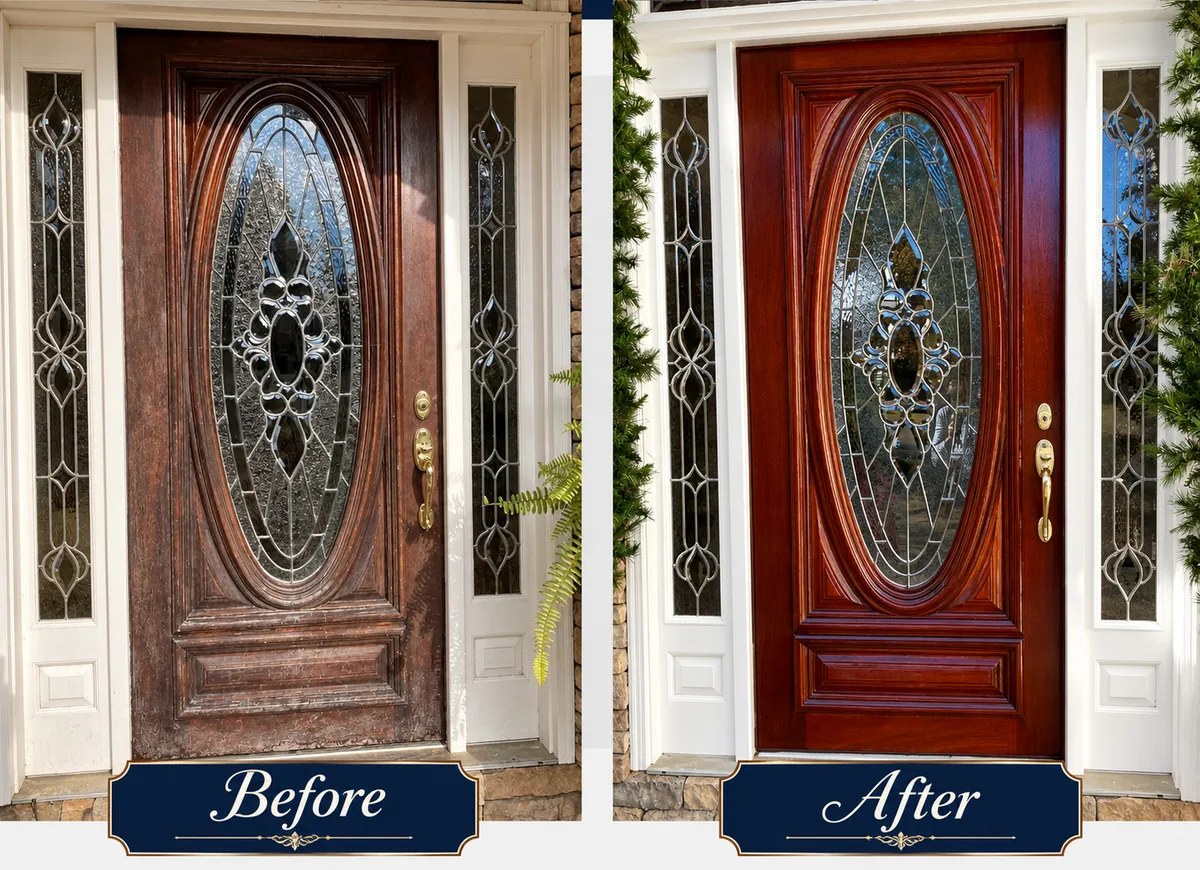
Your front door should be worth noticing.
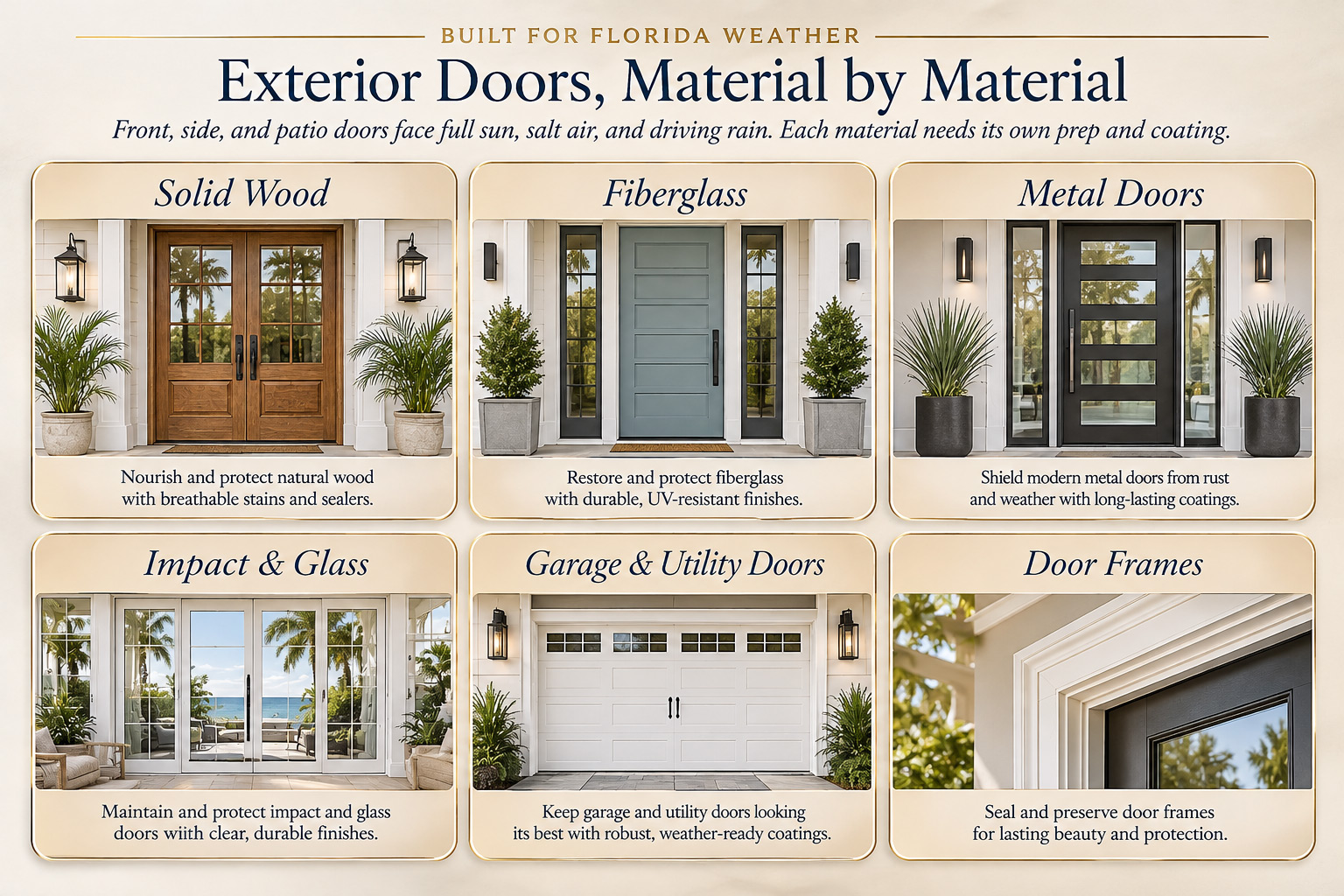
Here is how we prep and coat each material.
Mahogany, oak, and other hardwoods. Beautiful, but sun breaks down the finish and moisture swells the wood.
Tough and stable, often molded with a wood-grain texture. The factory finish fades and chalks in the sun.
Steel and aluminum doors are secure and sleek, but dents and scratches let rust and corrosion start, especially near the coast.
Hurricane-rated and glass-heavy doors with frames, grilles, and seals that must stay sealed.
Large panels that take the most sun and are often the biggest color block on the house.
The frame around the door is where rot and gaps usually start.
In full afternoon sun, very dark colors on fiberglass and steel doors can trap heat. We’ll check your door maker’s color guidance before you choose.

Here is what we watch for on each style, and how we finish it.
Classic six- or two-panel doors in wood or molded composite. Profiles collect drips if brushed carelessly.
Clean lines and square edges, so every brush mark and uneven edge shows.
Flat hollow- or solid-core doors. Simple, but large flat faces show every flaw.
Many small muntins around glass panes, each needing clean edges.
Dozens of slats and hinged panels that are nearly impossible to brush well.
Sliding doors with exposed hardware or hidden tracks and edges.
Wood doors can show their grain or wear a solid color. Both can last; they just ask for different care.
Rich color, easy to wipe clean, and a classic look on an entry.
Durable around handles and edges, with a soft sheen that hides less-than-perfect walls.
Satin for a hand-rubbed look, gloss for the deepest shine.
More on finishes in our painting comparisons guide.
A door that looks right from the hallway can still fail at the edges. We finish the parts most people never see.
We use the best spraying practices in the trade for a smooth, even, factory-quality finish.
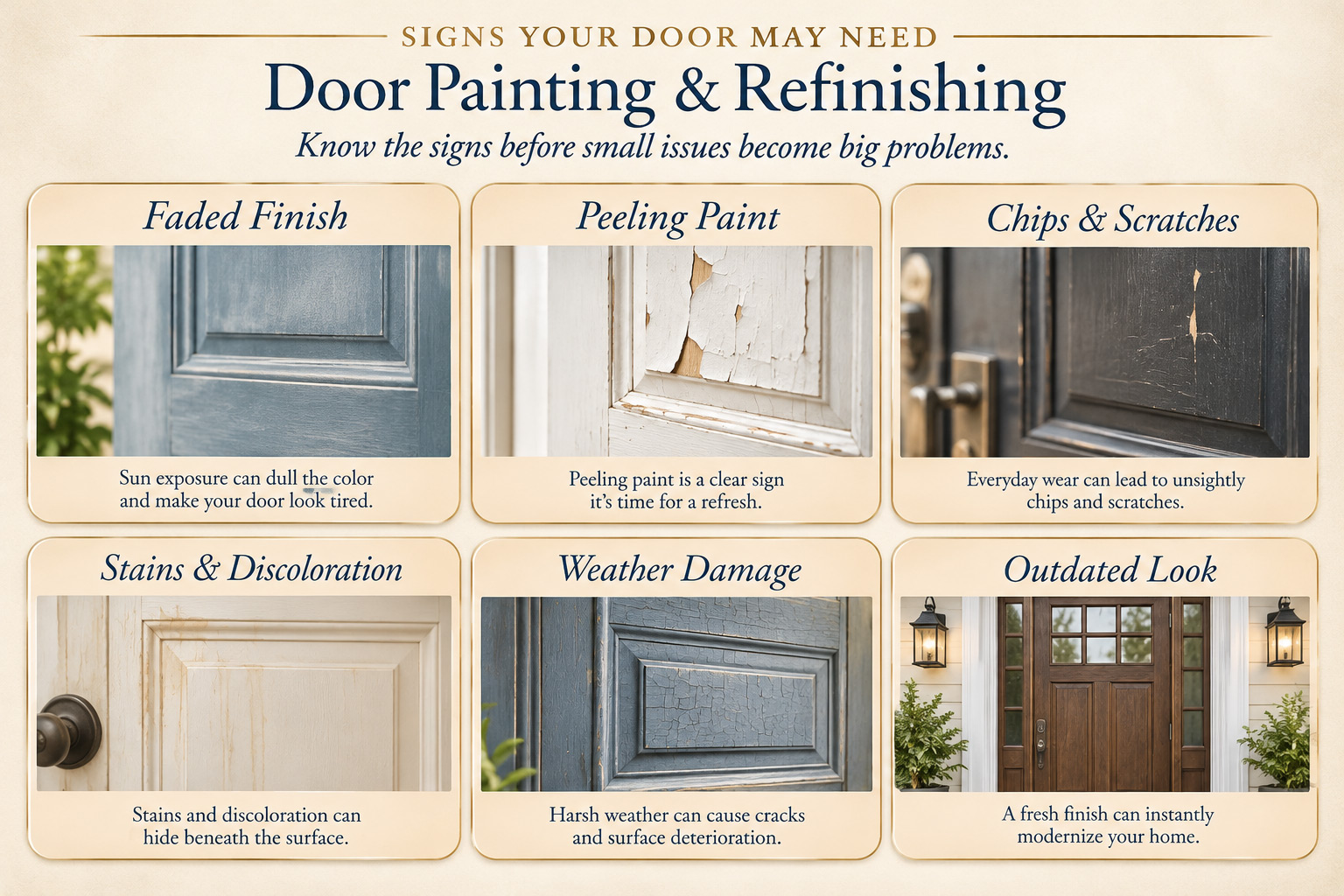
Usually, yes. We strip the failed finish, fill cracks and dings, then stain and clear coat or paint so the door looks new again.
Yes, with the right prep and coatings. Fiberglass is cleaned and lightly scuffed, and steel gets rust treatment and a metal primer.
We spray doors for a smooth, even, factory-quality finish, and hand-finish details where needed.
It depends on sun exposure. A door in full sun may need a fresh clear coat every year or two, while a covered entry lasts longer.
Yes. We keep coats thin on hinge and latch edges and let the finish cure before the door closes tight.
Satin or semi-gloss. Both clean easily and hold up around handles and edges.
We refinish front, patio, garage, and interior doors across Palm Beach County. We’ll look at every door and put the plan in writing.
Or call (561) 677-8919
Planning a project? See painting pricing, try the instant estimator, learn how to avoid painting problems, or read the Placidity blog.

Painting and Renovations for Palm Beach County, under one calm process.















(561) 677-8919
222 Lakeview Ave Suite 800, West Palm Beach, FL 33401