


Deck Restoration Deck Staining & Restoration · Palm Beach County

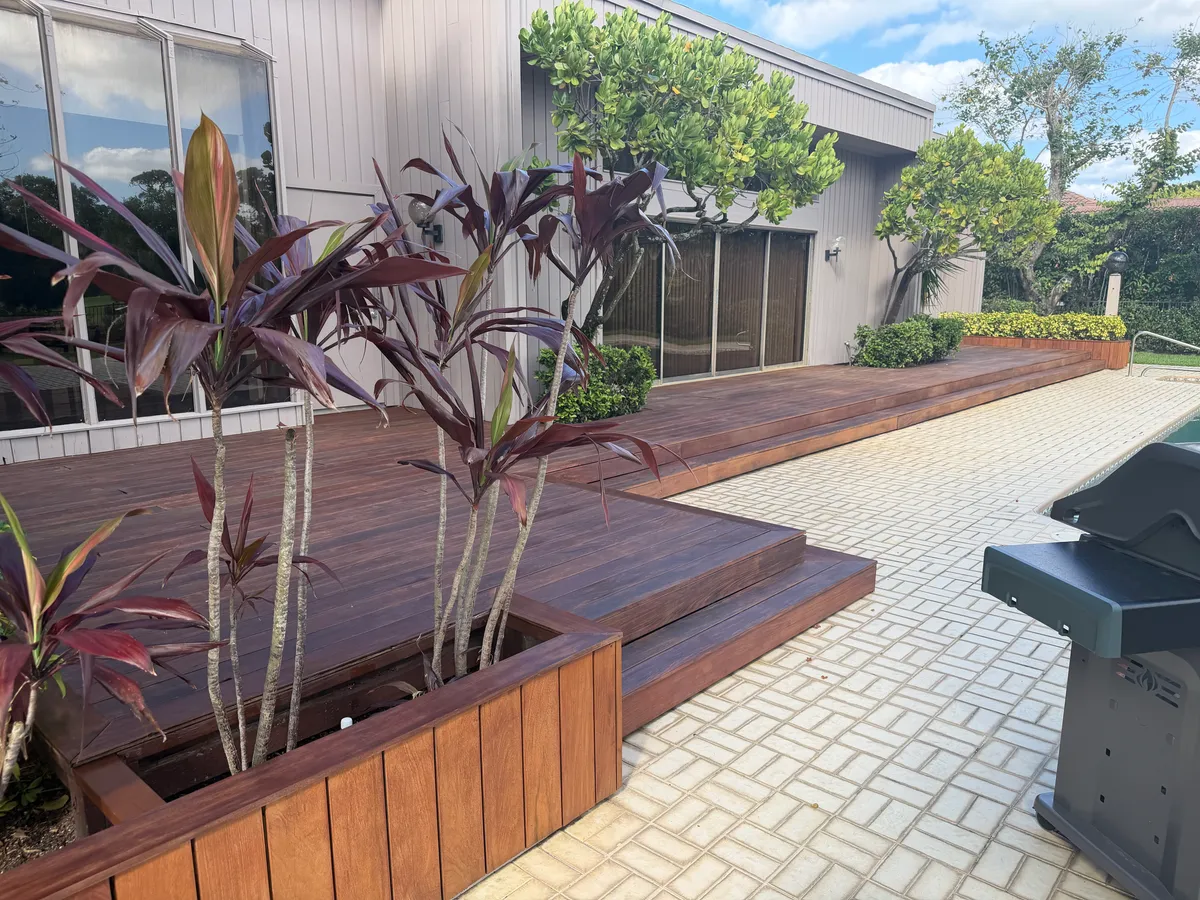
Deck Restoration That Brings the Wood Back to Life

From dense hardwoods like ipe and Brazilian teak to cedar and pressure-treated pine, every wood ages differently under Florida sun and salt air. We clean, restore, and stain each one the way its species needs.

Start Your Collaboration
22 years of painting experienceWritten scope & pricingHardwood & softwood decks
Know Your Wood

Every Species Takes Finish Differently

A stain that soaks into cedar can sit on top of ipe and peel. Matching the finish to the wood is everything.

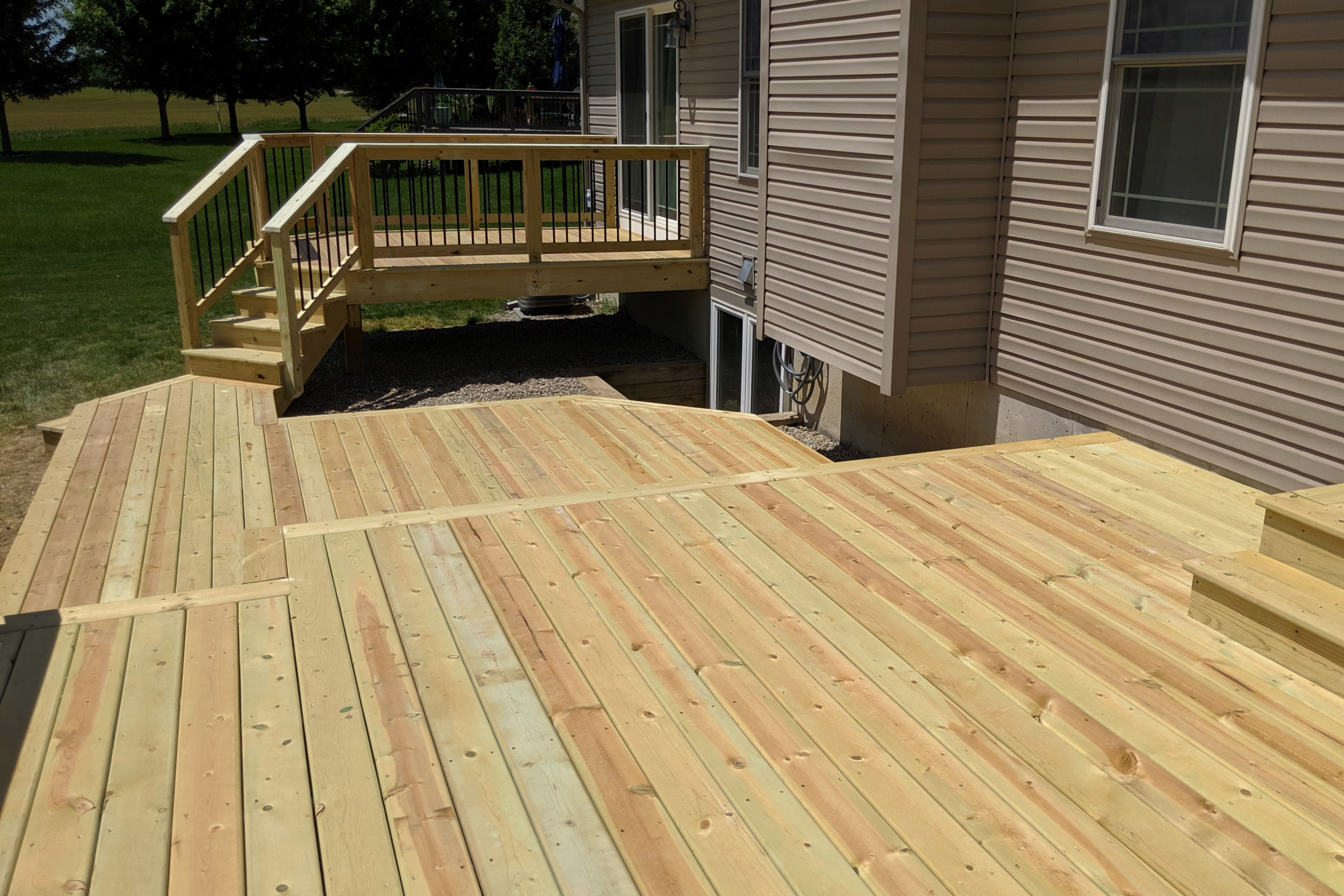
New pressure-treated pine deck with light, even boards

Pressure-Treated Pine

Softwood infused with preservatives to resist rot and insects. Affordable, but it cracks and grays fast in full sun, and it must dry fully before staining.

Origin
Southern yellow pine, grown in the U.S. Southeast
Our finish
Penetrating semi-transparent or semi-solid stain
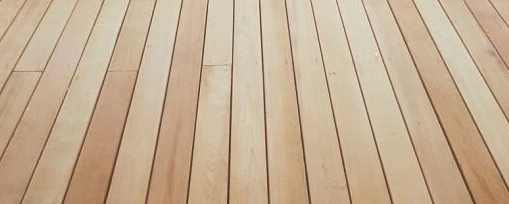
Light cedar deck boards with straight grain

Cedar

A light, soft, aromatic softwood whose natural oils resist decay and insects. Its tannins can bleed, and it fuzzes if over-washed.

Origin
Mostly Western red cedar from the Pacific Northwest and Canada
Our finish
Oil-rich transparent or semi-transparent stain
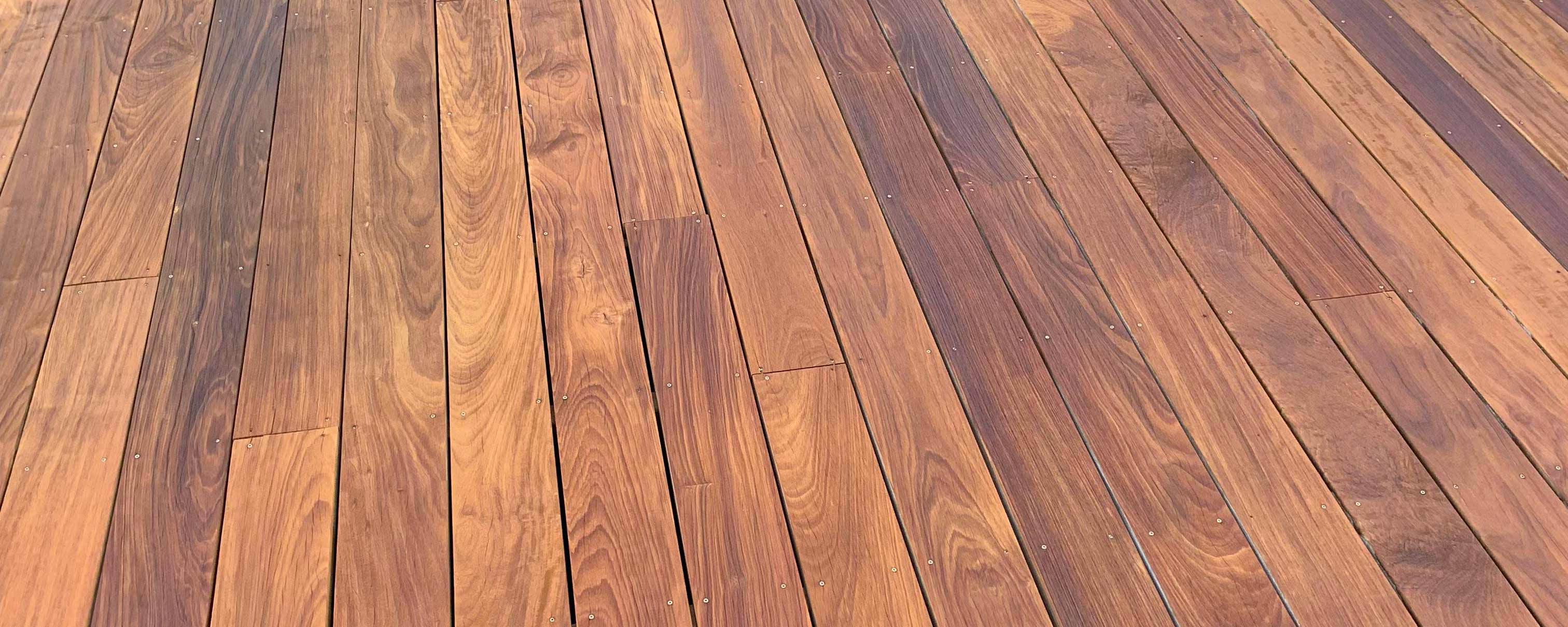
Ipe hardwood deck boards in deep brown tones

Ipe

Among the densest decking woods in the world, deep brown and extremely long-lasting. Its tight, oily grain resists ordinary stains.

Origin
Tropical forests of Central and South America
Our finish
Hardwood penetrating oil, applied thin and wiped
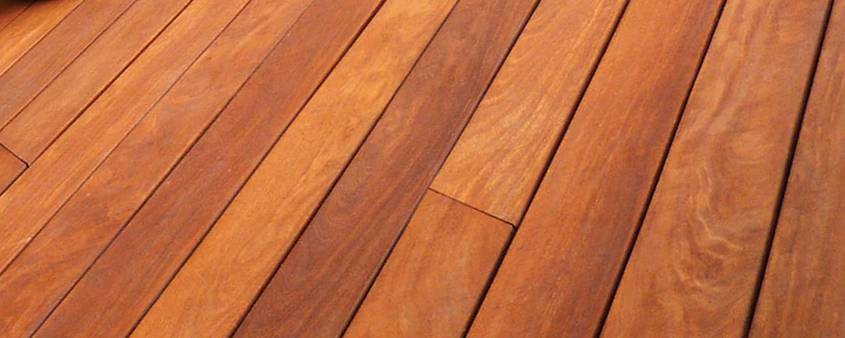
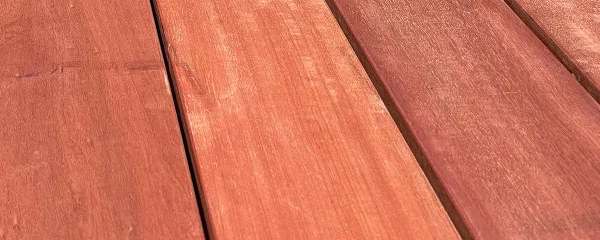
Cumaru hardwood deck boards in reddish-brown tones

Cumaru

Sometimes called Brazilian teak. Hard and dense like ipe, with tan to reddish-brown boards. It can check if left unsealed.

Origin
South America, mainly Brazil and Peru
Our finish
Hardwood penetrating oil and sealed board ends
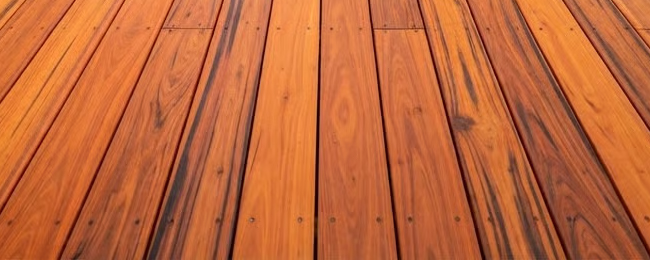
Tigerwood deck boards with dark stripes over orange-brown wood

Tigerwood (Goncalo Alves)

Named for the dark stripes that run across its orange-brown wood. Dense and oily, its color deepens with age.

Origin
Central and South America, mainly Brazil
Our finish
Penetrating oil after cleaning to let the finish absorb
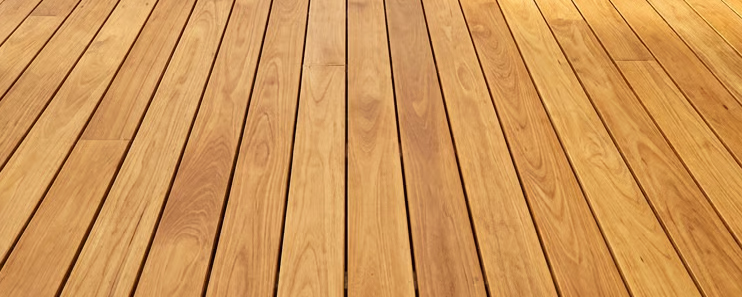
Golden garapa deck boards

Garapa (Brazilian Ash)

A golden, fine-textured hardwood, lighter in color than most exotics, so it tends to stay cooler underfoot. It fades to silver without care.

Origin
South America, mainly Brazil
Our finish
UV-protective penetrating oil to hold its golden tone
Deep red massaranduba deck boards

Massaranduba (Brazilian Redwood)

A heavy, very dense hardwood in deep reddish brown, naturally resistant to rot. It is prone to surface checks and end splits.

Origin
Central and South America, mainly Brazil
Our finish
Penetrating oil plus end-grain sealer
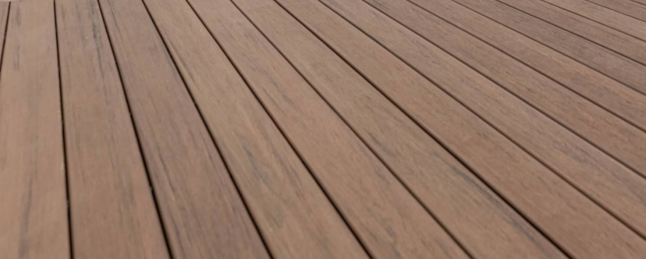
Brown composite deck boards

Composite & PVC

Manufactured boards of wood fiber and plastic, or all-PVC. Low maintenance but not no maintenance; they still collect mildew and grime.

Origin
Manufactured, no wood species
Our finish
Deep cleaning with approved products; we advise honestly on coatings
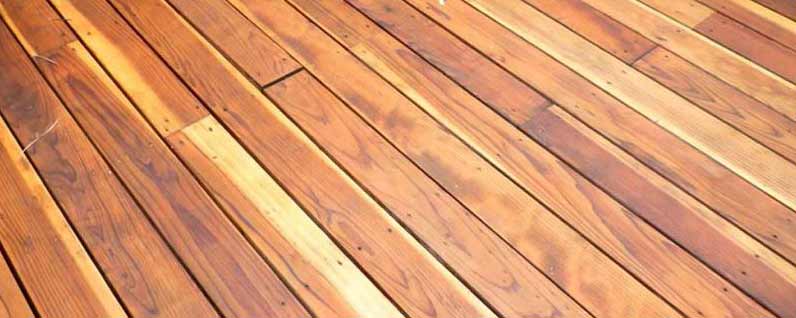
Brazilian teak hardwood deck boards in golden-brown tones

Brazilian Teak

Not true teak, but a trade name for dense South American hardwoods, most often cumaru. Golden to reddish brown, very hard, and long-lasting. True teak from Southeast Asia is mostly used on boats and furniture.

Origin
South America, mainly Brazil
Our finish
Hardwood penetrating oil, refreshed on a regular schedule

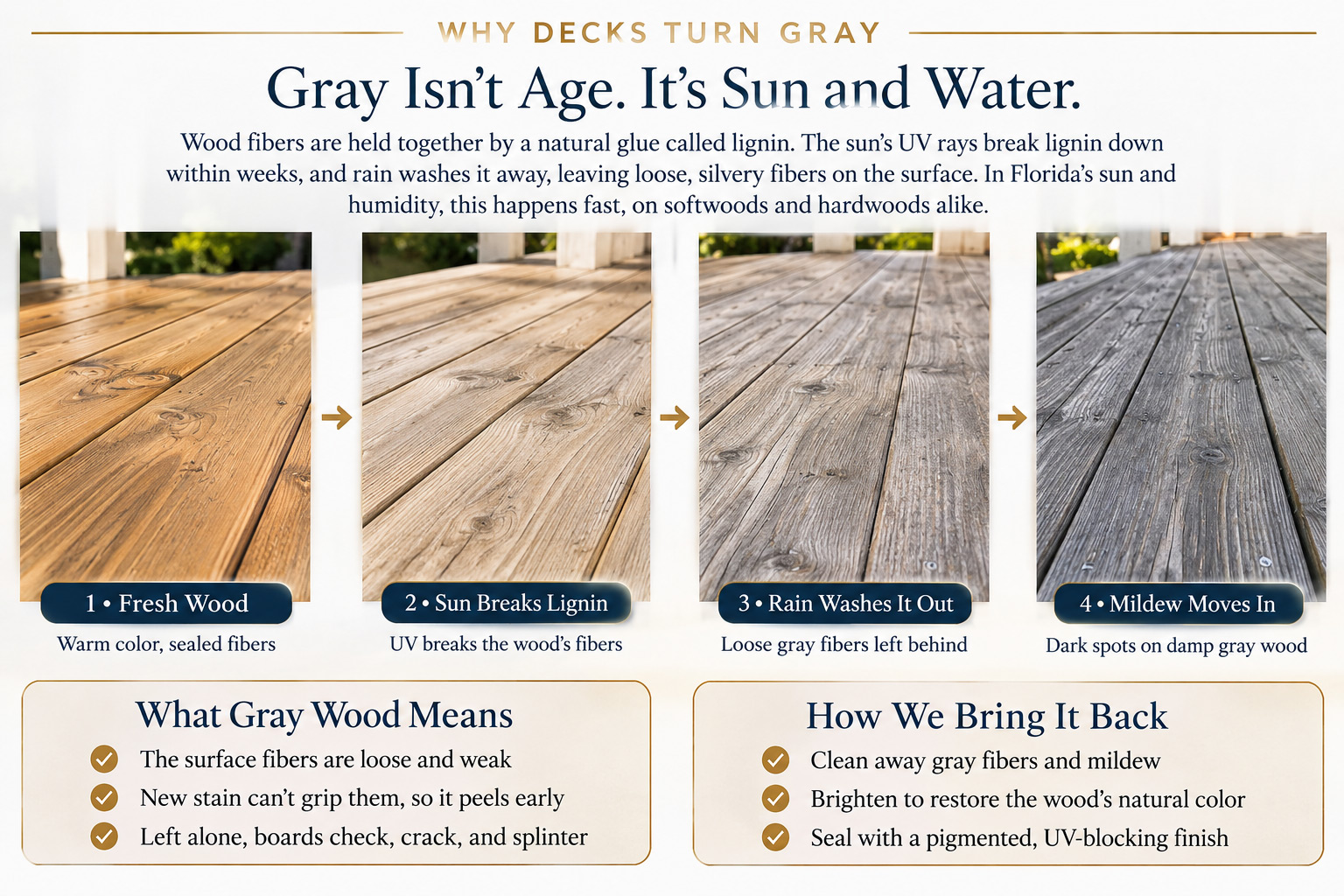
Why Decks Turn Gray: Gray Isn’t Age, It’s Sun and Water

Why decks turn gray. Wood fibers are held together by lignin; the sun’s UV rays break it down and rain washes it away, leaving loose gray fibers. Four stages: fresh wood, sun breaks lignin, rain washes it out, mildew moves in. Gray wood means loose fibers, peeling stain, and cracking boards. We bring it back by cleaning, brightening, and sealing with a pigmented UV-blocking finish.

Some owners love a silver patina on ipe or Brazilian teak. That’s a fine choice, but the wood still needs cleaning to stay sound. A maintenance program keeps graying from starting again.

Stain Opacity, Explained

How Much Grain Do You Want to See?

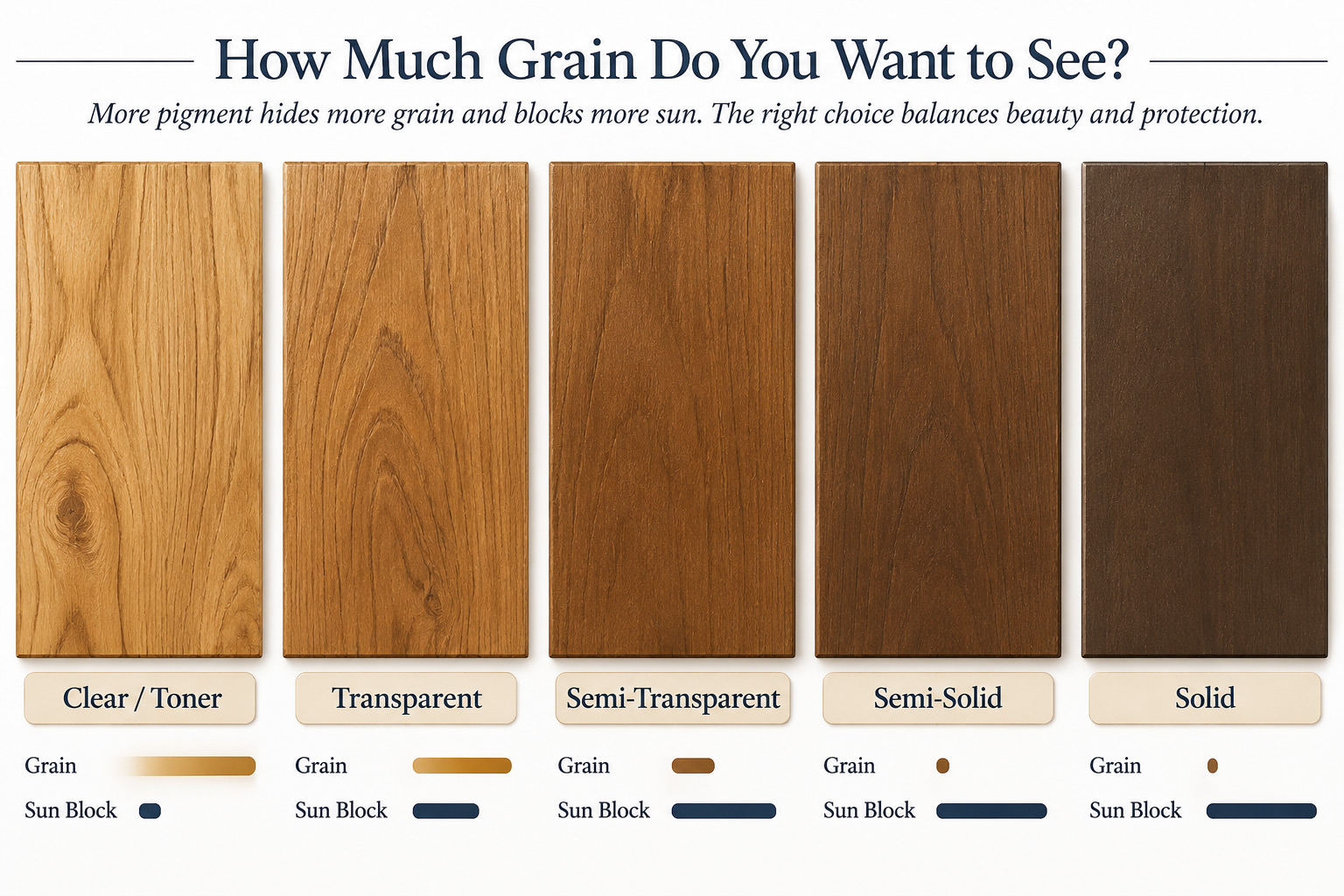
How much grain do you want to see? Five wood boards from clear toner to transparent, semi-transparent, semi-solid, and solid stain. More pigment hides more grain and blocks more sun.
Film-Forming Paint

Paint on a Walking Surface

  • Sits on top of the wood as a film
  • Traps moisture that pushes up from below
  • Peels and flakes where feet and furniture wear it
vs
Penetrating Stain

Finish That Soaks In

  • Absorbs into the fibers and lets wood breathe
  • Wears away gradually instead of peeling
  • Recoats with a clean and a fresh coat

See more on paint vs stain on exterior wood in our comparisons guide.

Where Decks Wear First

Every Part of the Deck, Not Just the Boards

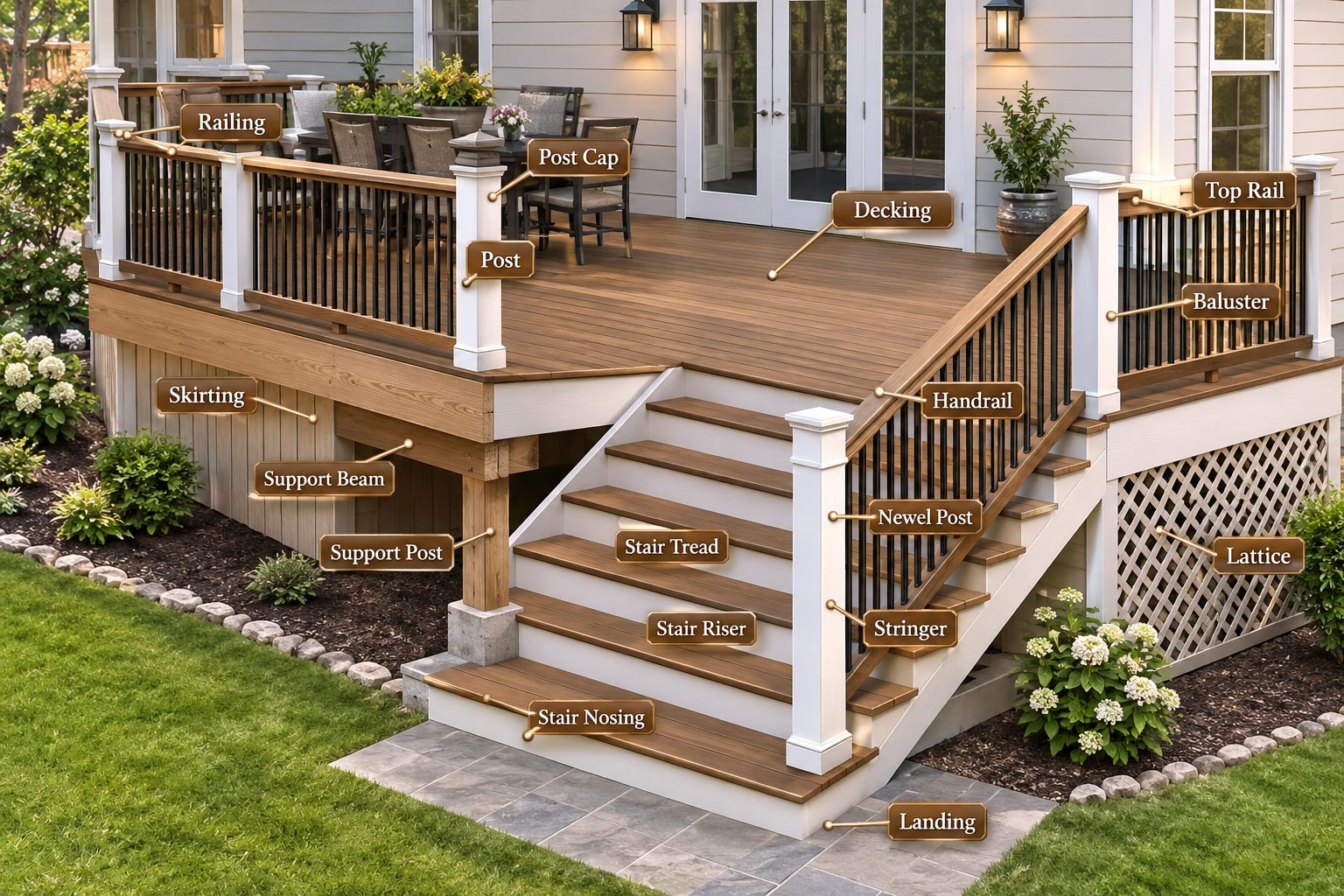
A deck fails at its weakest point. We inspect and finish every one of these parts, not just the boards you walk on.

Labeled deck diagram showing railing, post cap, post, decking, top rail, baluster, handrail, newel post, skirting, support beam, support post, stair tread, stair riser, stair nosing, stringer, lattice, and landing
Walking Surface

Decking & Landing

  • Decking Takes the most sun and traffic, so it grays and wears first.
  • Landing Where the stairs meet the ground; pavers here are cleaned and sealed.
Railing System

Rails, Posts & Balusters

  • Top Rail & Railing Flat tops hold rain and sun, and hands touch them daily.
  • Balusters Dozens of small pieces, finished on every side.
  • Posts & Post Caps Caps shield the post’s end grain from water.
Stairs

Treads, Risers & Rails

  • Stair Treads & Nosing The edges wear fastest and must stay safe underfoot.
  • Stair Risers Vertical faces, often painted to contrast with stained treads.
  • Stringers The sloped boards carrying the steps; checked for rot.
  • Handrail & Newel Post Sanded smooth to the touch and sealed.
Structure & Base

Beams, Posts & Skirting

  • Support Beams & Posts Inspected for rot, rust, and loose fasteners.
  • Skirting & Lattice Cleaned of mildew and finished to match the deck.

The Placidity Method: Six Steps to a Restored Deck

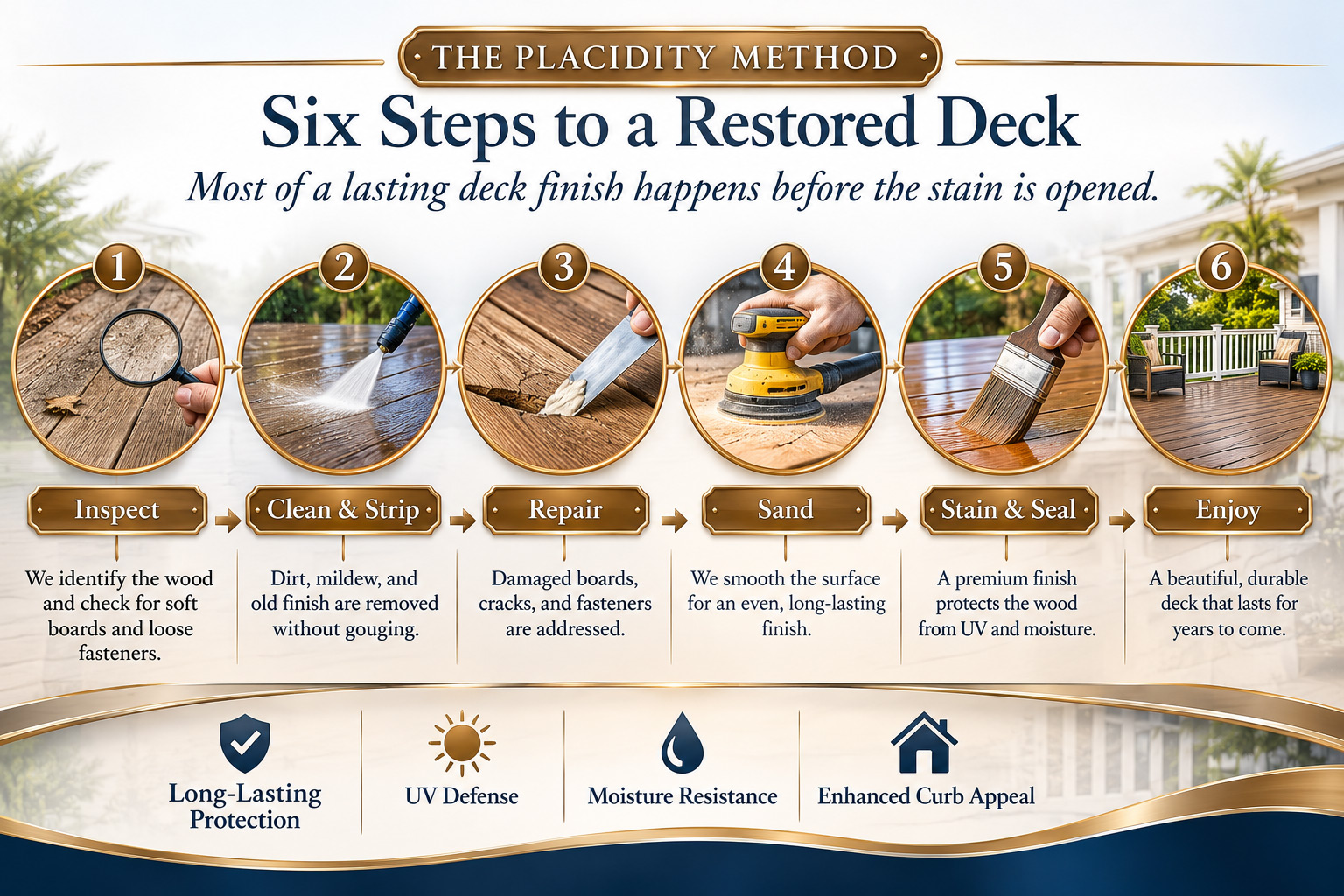
The Placidity Method, six steps to a restored deck: 1 Inspect the wood for soft boards and loose fasteners, 2 Clean and strip dirt, mildew, and old finish without gouging, 3 Repair damaged boards, cracks, and fasteners, 4 Sand for an even, long-lasting finish, 5 Stain and seal against UV and moisture, 6 Enjoy a beautiful, durable deck.

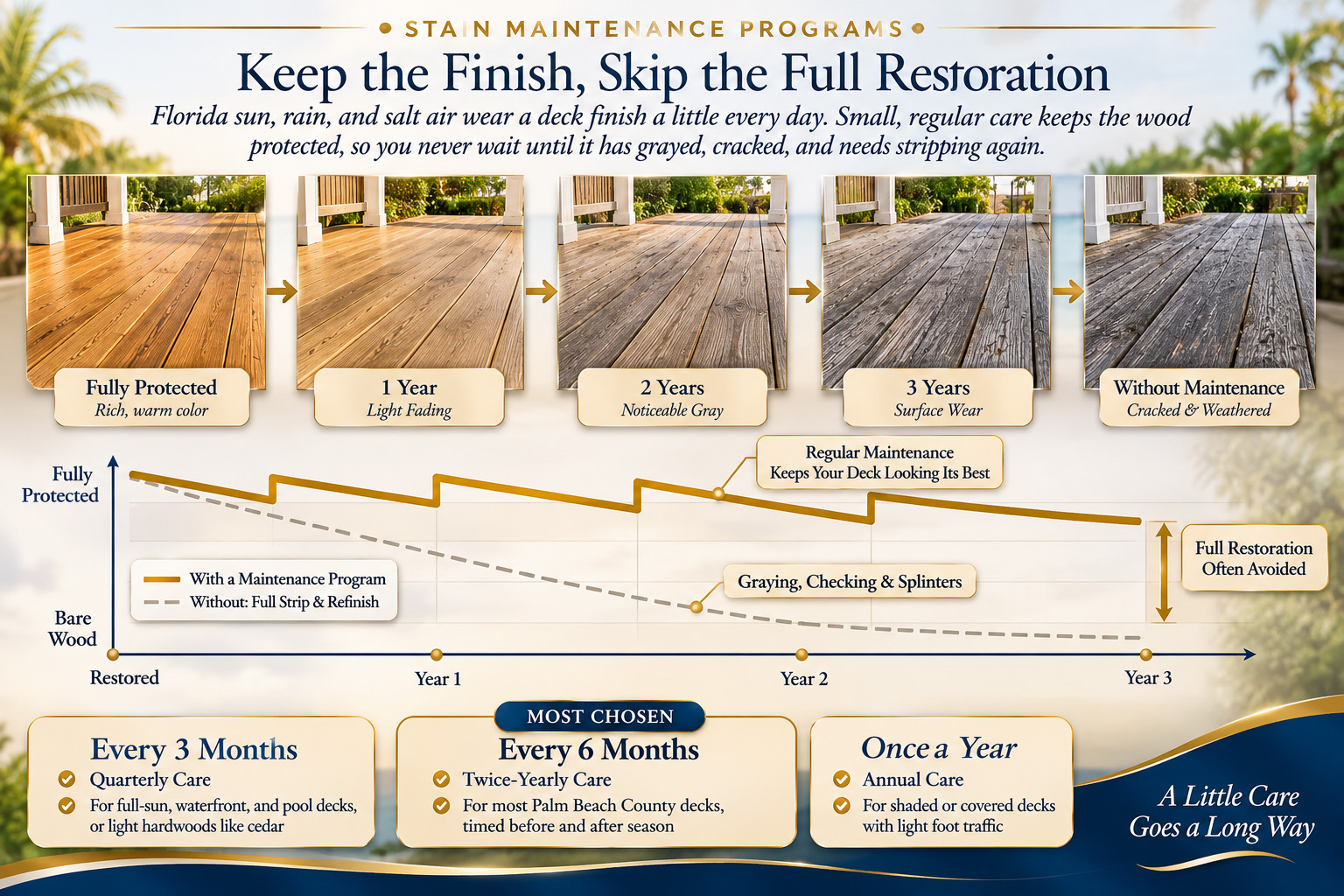
Stain Maintenance Programs: Keep the Finish, Skip the Full Restoration

Stain maintenance programs. A deck weathers from fully protected to light fading at one year, noticeable gray at two years, and surface wear at three years, then cracked and weathered without maintenance. With a maintenance program the finish stays protected and a full restoration is often avoided. Plans: every 3 months, every 6 months (most chosen), or once a year.

Each Visit Includes

  • Gentle cleaning of dirt, pollen, and mildew
  • Inspection of boards, rails, stairs, and fasteners
  • A refresh coat on worn, high-traffic areas

Why It Matters

  • Wood never dries out, grays, or splinters
  • Small touch-ups cost far less than a full restoration
  • Your deck looks finished all year, not just after a project

Ask about a maintenance program when we restore your deck, or add one to a deck we’ve already finished.

Is It Time?

Signs Your Deck Needs Care

The Water Test

  • Water soaks in instead of beading up
  • Boards stay dark long after rain
  • Mildew or green growth in shaded areas

Look & Touch

  • Silver-gray color replacing the wood’s warmth
  • Splinters, raised grain, or cracked board ends
  • Stain worn bare on stairs and walkways
Questions

Deck Restoration FAQ

How often should a deck be restained in Florida?

It depends on the wood, sun, traffic, and finish. Our maintenance programs refresh the finish every 3, 6, or 12 months so it never wears through.

Can you stain an ipe deck?

Yes, with a penetrating oil made for dense hardwoods, applied thin after cleaning and brightening.

Should I stain a new pressure-treated deck right away?

Usually not. New treated lumber is often wet and must dry first. If water beads up, it isn’t ready.

Is it better to paint or stain a deck?

For walking surfaces, penetrating stain is usually better, because paint peels under foot traffic. Solid stain can suit railings.

Do you replace damaged deck boards?

Yes. Repair is part of our restoration process. During inspection we mark soft, cracked, or loose boards and fasteners, and they are repaired or replaced before any stain goes on.

Can composite decks be restored?

It can’t be stained like wood, but it can be deep-cleaned with approved products.

Your Outdoor Space Matters

Let’s Bring Your Deck Back

We restore decks across Palm Beach County. We’ll identify your wood, test the finish on your boards, and put the plan in writing.

Start Your Collaboration Or call (561) 677-8919

Deck Staining Near You

We restore and stain decks in every city, town and village in Palm Beach County, and we stain fences too.


  • Atlantis
  • Belle Glade
  • Boca Raton
  • Boynton Beach
  • Briny Breezes
  • Cloud Lake
  • Delray Beach
  • Glen Ridge
  • Golf
  • Greenacres
  • Gulf Stream
  • Haverhill
  • Highland Beach
  • Hypoluxo
  • Juno Beach
  • Jupiter
  • Jupiter Inlet Colony
  • Lake Clarke Shores
  • Lake Park
  • Lake Worth Beach
  • Lantana
  • Loxahatchee Groves
  • Manalapan
  • Mangonia Park
  • North Palm Beach
  • Ocean Ridge
  • Pahokee
  • Palm Beach
  • Palm Beach Gardens
  • Palm Beach Shores
  • Palm Springs
  • Riviera Beach
  • Royal Palm Beach
  • South Bay
  • South Palm Beach
  • Tequesta
  • Wellington
  • West Palm Beach
  • Westlake
  • The Acreage
  • Jupiter Farms
  • Loxahatchee
  • Canal Point
  • West Boca Raton

Explore More Placidity Services

Painting and Renovations for Palm Beach County, under one calm process.

Meet Us Virtually Schedule Estimate Get My Instant Estimate Services Painting Pricing Painting Comparisons Avoid Painting Problems Avoid Renovation Problems Placidity Pro Painting Homepage Placidity Renovations Homepage Licensing & Insurance

(561) 677-8919
222 Lakeview Ave Suite 800, West Palm Beach, FL 33401

Instagram